
 Canada
 Cayman Islands
 Dominican Republic
 Hong Kong
 India
India
 Indonesia
 Ireland
 Jamaica
 New Zealand
 Singapore
 Thailand
 United Kingdom
 United States
 Vietnam

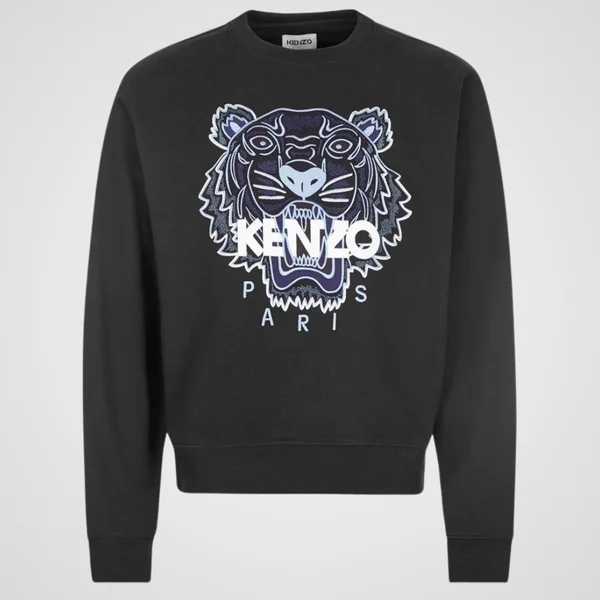
The tiger head has become one of fashion's most recognisable motifs, and it's rarely the same twice depending on how it's applied to the fabric. Two tees can carry the exact same design and still feel worlds apart once you factor in whether that tiger's printed or stitched into the cotton.
Print Gives the Design Room to Breathe
Printed versions of the kenzo tiger tend to allow for more colour depth and finer detail than embroidery ever could, since ink sits flat against the fabric rather than being built up in thread. Gradients, shading, and softer colour transitions come through more clearly this way, which is part of why some of the brand's boldest, most graphic designs lean on print rather than stitching. It also keeps the fabric lighter, since there's no extra thread bulk sitting on the surface.
Embroidery Adds Weight and Texture
A stitched tiger head reads differently the second you run a hand over it. Embroidery builds the design in raised thread, giving it a tactile, almost sculptural quality that print simply can't replicate. That texture also tends to age well, since embroidered logos generally hold their shape and colour through more washes than a printed design exposed to the same wear. It's a big part of why embroidered pieces often carry a slightly more premium feel, even on an otherwise casual tee.
Placement and Scale Shift with the Technique
Printed tigers show up more often across the whole chest or even wrapping toward the sleeve, since ink can cover larger areas without adding weight to the garment. Embroidered versions tend to sit smaller and more centred, usually on the left chest, since large embroidered patches can feel stiff or heavy if scaled up too far. That difference in scale changes how a kenzo shirt reads on the body, one leans toward a statement graphic, the other toward a quieter, logo-driven look.
Which One Fits Your Style
Print suits anyone after a bolder, more graphic piece with visible colour and detail from across the room. Embroidery suits someone after subtlety and a bit more durability, since the stitched motif tends to survive years of washing better than a printed design that can crack or fade with repeated wear. Neither technique makes one version more "authentic" than the other. It really comes down to whether you want the design to shout or just quietly hold its own.
Both approaches trace back to the same tiger motif, but the technique behind it changes how the piece feels, wears, and photographs, sometimes more than the actual design itself does.