 Canada
 Cayman Islands
 Dominican Republic
 Hong Kong
 India
India
 Indonesia
 Ireland
 Jamaica
 New Zealand
 Singapore
 Thailand
 United Kingdom
 United States
 Vietnam

Walk into any older workshop after 5pm and you'll notice the same thing: flickering fluorescent tubes, dim corners near the fire exit, and a switchboard someone's been meaning to replace for years. Corridors, storerooms and utility spaces rarely get design attention, yet they're exactly where good lighting earns its keep, both for daily use and for the moment power drops out.
Why battens still make sense in 2026
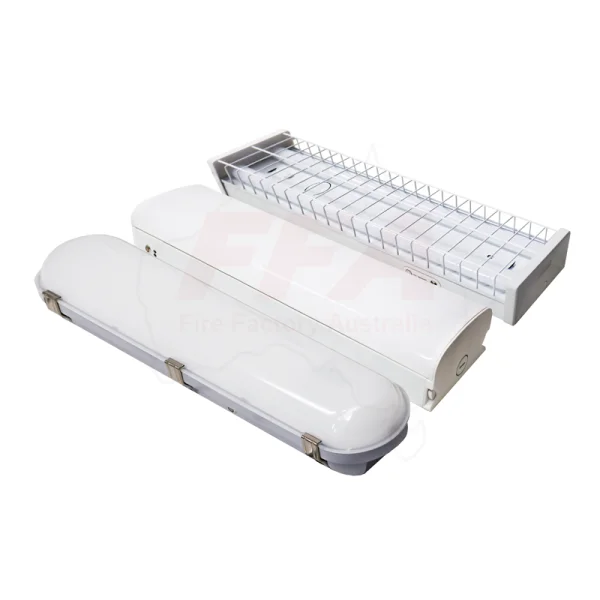
LED technology has moved fast, but the humble batten hasn't gone anywhere. LED battens remain the go-to fixture for long, narrow spaces because they throw even light along a corridor or aisle without the shadow gaps you get from downlights spaced too far apart. A 1.2m unit running SMD LEDs at 4000K typically pushes out somewhere around 4000 lumens, enough to properly light a workshop bay without the harshness of older fluorescent tubes. They're also simple to mount, whether surface-fixed to a low ceiling or suspended in a warehouse with more headroom.
The bit people forget: emergency function
A batten that looks the part during the day isn't much good if the power cuts and nobody can find the exit. This is where LED batten emergency lighting earns its place in any fit out that includes corridors, stairwells or loading docks. Under AS/NZS 2293, emergency lighting has to keep working for at least 90 minutes on battery backup, and a fair few commercial-grade battens now exceed that, running to 120 minutes on LiFePO4 cells. Maintained versions stay lit constantly; non-maintained units only kick in when mains power fails, which suits back-of-house areas where constant illumination isn't needed.
Matching specs to the space
Not every corridor needs the same fitting. A general office hallway might get away with a slim IP44-rated batten, while a loading dock or wash bay needs something closer to IP65 or IP66 with a polycarbonate housing that shrugs off dust and moisture. Commercial LED batten lights built for industrial use often add an IK rating too, protecting against knocks from trolleys, forklifts or the odd dropped toolbox. Colour temperature matters more than people assume, warmer 3000K light suits break rooms, while 5000K daylight white keeps workshops feeling alert and sharp.
Getting it right the first time
Retrofitting a corridor is far cheaper than doing it twice. Checking lumen output against floor area, confirming the IP rating suits the environment, and making sure emergency duration meets AS 2293 before installation saves a return visit later. A quick chat with a supplier who actually asks about your floor plan, rather than just quoting a catalogue number, tends to get the spec right the first time round. For learn more https://www.firefactory.com.au/led-emergency-lighting/led-battens/