 Canada
 Cayman Islands
 Dominican Republic
 Hong Kong
 India
India
 Indonesia
 Ireland
 Jamaica
 New Zealand
 Singapore
 Thailand
 United Kingdom
 United States
 Vietnam

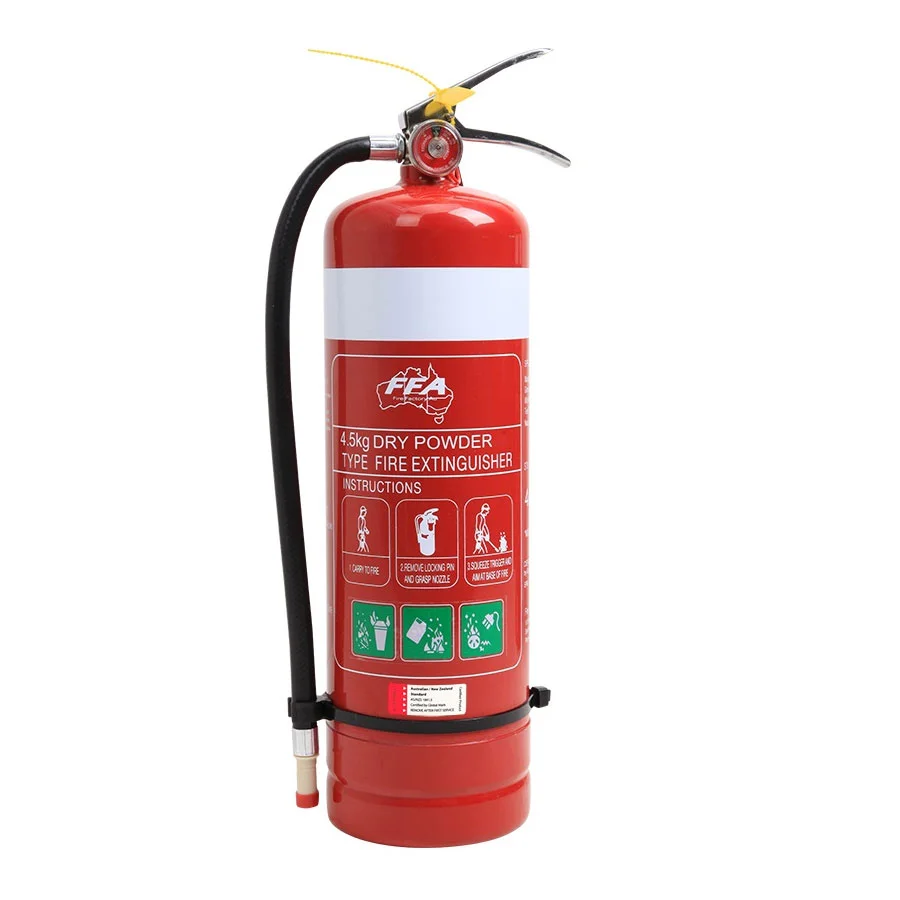
Walk through most Australian warehouses and you'll spot the same red cylinders bolted to walls every ten metres or so. Fine for a bin fire near the tea room. Less fine if your worksite deals in bulk solvents, timber stacks or a diesel generator the size of a shed. That's where mobile extinguishers earn their keep, and picking the right one comes down to matching capacity and manoeuvrability to the actual hazard in front of you, not just ticking a compliance box.
Why size and mobility matter more than people think
A standard 9kg handheld unit empties in roughly ten to fifteen seconds. That's plenty for a Class A fire in an office kitchen but nowhere near enough for a fuel spill in a mechanical bay. Bigger extinguishers hold more agent and throw it further, which buys the crucial extra seconds needed before a small flame becomes an evacuation. AS 2444 sets out how extinguishers should be selected and positioned based on hazard classification, travel distance and floor area, and larger sites with higher fire loads generally need equipment that outperforms a handheld cylinder.
Trolley units: the middle ground
A trolley fire extinguisher sits between a handheld unit and a full wheeled rig, usually carrying somewhere around 30 to 50kg of extinguishing agent on a simple two-wheel frame one person can push. Workshops, loading docks and smaller manufacturing floors tend to favour these, since they cover a wider hazard zone than a handheld but don't need a dedicated storage bay or trained team to shift them around.
Wheeled extinguishers for serious hazard zones
Step up again and you're looking at a wheeled fire extinguisher, often holding 50kg or more of dry chemical, foam or CO2. These are built for sites where a small flame could escalate fast: fuel depots, aircraft hangars, chemical storage areas. They demand more floor space and usually a two-person operation, but the trade-off is a dramatically longer discharge time and reach, sometimes six to nine metres depending on the agent.
Matching the unit to the site
Large-scale operations, think mining yards, ports, or manufacturing plants running hot works daily, often need something closer to an industrial mobile fire extinguisher setup, sized specifically to the fuel load and layout of the facility rather than a generic off-the-shelf rating. Getting this wrong in either direction wastes money or, worse, leaves a gap in cover.
Talk to a fire safety provider who'll actually assess your floor plan and hazard classes rather than just quoting a catalogue number. The right extinguisher is the one sized for the fire you're most likely to have, not the fire you hope you never do. For learn more https://www.firefactory.com.au/fire-extinguishers/mobile-extinguisher/