
 Canada
 Cayman Islands
 Dominican Republic
 Hong Kong
 India
India
 Indonesia
 Ireland
 Jamaica
 New Zealand
 Singapore
 Thailand
 United Kingdom
 United States
 Vietnam

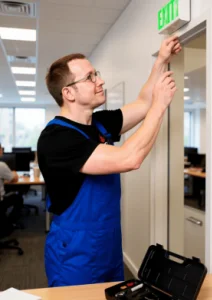
Emergency lights usually sit in the background. You probably do not notice them until the power goes out. Regular checks make sure these systems actually work when you need them most. During routine inspections, certain issues show up repeatedly. Many of these problems are easy to prevent. You just need to keep up with basic maintenance.
1. Battery Failures and Reduced Backup Time
The most common problem involves old or failing batteries. These lights rely on stored power to stay on during a blackout. Batteries naturally break down over time. Sometimes a light turns on but only lasts a few minutes. This is dangerous because people could be left in the dark. Technicians often find this during emergency lighting testing in Sydney. They check to see if the batteries last as long as they should.
2. Faulty or Damaged Light Fittings
Physical wear and tear can stop a light from working. Cracked cases, loose wires, or rust can cause lights to flicker or fail. In busy buildings, people often bump into these fixtures by accident. Even small bits of damage can make the light unreliable. A quick visual check usually catches these problems early.
3. Poor Illumination Levels
Sometimes the lights turn on, but they are just too dim. Dust, old bulbs, or outdated fixtures can lower the brightness. This is a big safety risk in hallways and stairs. You need to see where you are going to get out safely. Inspectors measure the light levels to make sure they match safety rules. If a light is too dim, fix it right away.
4. Inadequate Placement or Coverage
Not every issue is about broken parts. Sometimes the lights are just in the wrong spots. You might find dark patches if the building layout changed. Renovations or new walls can block the light. If you move things around, you must update your lighting plan too.
5. Failure of Test Switches and Indicators
Most units have small switches and tiny lights that show their status. If these small parts fail, you cannot be sure the system works. A light might look fine on the outside but fail during a power cut. If the testing switch is broken, you lose your early warning system.
6. Lack of Routine Maintenance Records
Many buildings have missing or messy maintenance logs. You need these records to track repairs and battery replacements. Without clear notes, it is hard to prove your building is safe. This documentation is vital for your annual fire safety statement in Sydney. Keeping good records makes the whole process much easier.
Final Thoughts
Most faults found during checks are simple to fix. They can lead to big problems if you ignore them. Staying on top of repairs keeps everyone safe. To know more https://firststopfire.com.au/sydney-exit-and-emergency-lighting/