Canada
 Cayman Islands
 Dominican Republic
 Hong Kong
 India
 Indonesia
 Ireland
 Jamaica
 New Zealand
 Singapore
 Thailand
 United Kingdom
 United States
 Vietnam

Finding the right laminar flow cabinet in Australia is easier than it looks, but only once you know what to compare. Spec sheets pile up fast, and the terms overlap. Some suppliers call these units laminar flow hoods, while others say tissue culture hoods. Here are five factors that matter most.
Start With Airflow Direction
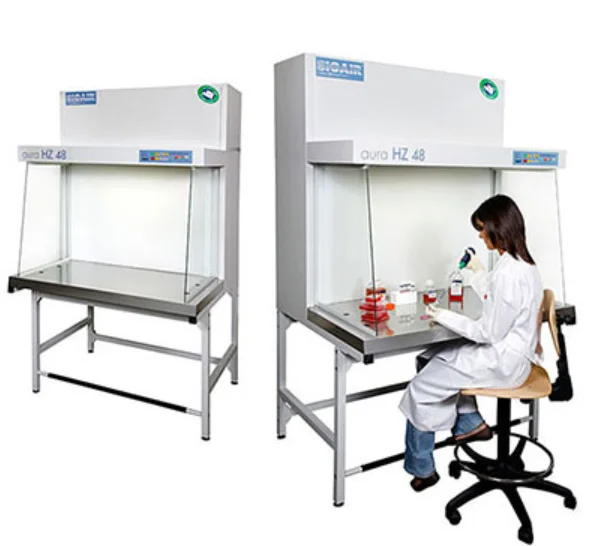
Airflow is the first thing to settle, and the two main layouts suit different jobs. The Aura HZ is horizontal, while the Aura Mini is vertical. Horizontal units push filtered air across the work surface, so consider which way your materials need protecting. Match the airflow to the work you do, and you’ll avoid a costly mismatch.
Check the Testing and Standards
Certification shows whether a cabinet performs the way the brochure claims. LAF tech offers NATA accredited testing against standards including ISO 14644 and AS 2252.2, so you can request documented results. Ask for those reports before you commit, and check the dates on them. A supplier who shrugs at paperwork is telling you something.
If your work calls for an ISO 5 laminar flow cabinet, ask the supplier to show testing against ISO 14644 before you buy. Good paperwork should name the test method and the date it was run.
Match the Model to the Job
The range covers more than one style of work. The Purair LF and Embryosafe 100 sit alongside the Aura models, and the Laminar Air Flow Trolley adds mobility when your setup changes. Think about how often the cabinet moves and who else shares it. A fixed bench usually suits some labs well, while a trolley suits teams sharing one busy room. Sort your shortlist by job first, then by budget.
Know Your Brand and Distributor
Brand matters because service depends on it. LAF tech is the exclusive Australian distributor for Air Science and BioAir, which gives buyers one local route for both lines. Ask who handles warranty claims and parts. A clear answer now saves frustration when a filter needs replacing later.
Plan for Service Across the Region
A cabinet is only as good as its support. LAF tech says it provides service and support for its laminar flow brands across Australia and New Zealand, which helps if your lab has sites in both countries. Ask about response times, and get the answer in writing. Support gaps tend to show up at the worst moments.
Weigh these five points together rather than chasing one spec. Compare two or three suppliers’ side by side, and ask each for a demo and documented test results. Most buyers don’t regret taking an extra week to decide. Your own bench and workload should drive the final pick, not the glossiest brochure.