 Canada
 Cayman Islands
 Dominican Republic
 Hong Kong
 India
India
 Indonesia
 Ireland
 Jamaica
 New Zealand
 Singapore
 Thailand
 United Kingdom
 United States
 Vietnam

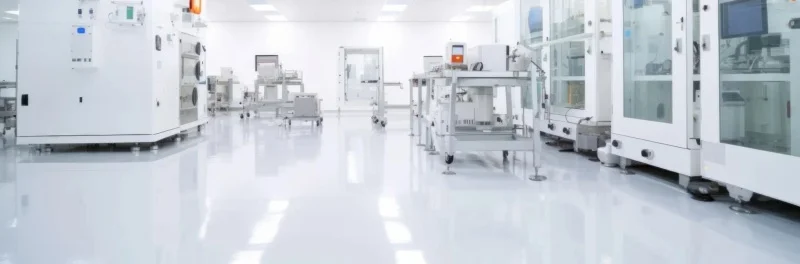
Four walls, filtered air, staff in gowns, and somehow that's supposed to be proof a room is clean enough for pharmaceuticals or microchips. It isn't, not on its own, not even close. What actually proves it is a set of numeric limits and physical tests, and getting that right in Australia means working through a specific standard rather than eyeballing a HEPA filter and calling it a day.
What the Numbers Actually Say
ISO 14644-1 sorts cleanrooms into nine classes, and the gap between them is enormous. ISO Class 5, the standard used for aseptic filling lines, allows no more than 3,520 particles of 0.5 microns or larger per cubic metre of air. Step down to ISO Class 7 and that limit jumps to 352,000. Drop further to Class 8, common in general assembly or packaging areas, and it's 3,520,000, a thousand times looser than Class 5. Locally, this sits under ISO 14644 cleanroom certification through AS ISO 14644.1, the Australian adoption most facility managers reference once a build wraps up.
Proving the Numbers Hold Up
A classification target means nothing without the testing that backs it. AS/ISO 14644.3 sets out methods for particle counting, air velocity, HEPA filter leakage, pressure differentials and recovery time, how fast a room resettles after a door opens or someone walks through. Cleanroom certification in Australia typically runs these checks across three states: as-built, at-rest and operational, because particle counts with people and equipment running can look nothing like an empty room. A Class 8 space in operation can carry far more particles than the same room sitting idle overnight.
Re-testing Isn't Optional Guesswork
ISO 14644-2 sets maximum intervals too, not just initial checks. Rooms at ISO Class 5 or tighter need particle counts and filter integrity retested every six months; Class 6 and looser stretches to twelve. Skipping this on a hunch that "it still looks fine, nothing's changed" is how facilities end up failing an audit they genuinely thought they'd pass with room to spare. Anyone comparing cleanroom testing companies in Australia should ask which methods each provider actually covers and whether NATA accreditation sits behind their reports, since unaccredited results rarely satisfy a serious auditor.
The Real Cost of Getting This Wrong
A pharmaceutical batch contaminated mid-run, or a chip fab losing yield to stray particles drifting through a poorly sealed door, tends to cost far more than a single validation appointment ever would. Certification isn't paperwork produced for its own sake, and treating it that way misses the point entirely. It's the only real thing standing between a genuinely controlled environment and an expensive guess dressed up as one.