 Canada
 Cayman Islands
 Dominican Republic
 Hong Kong
 India
India
 Indonesia
 Ireland
 Jamaica
 New Zealand
 Singapore
 Thailand
 United Kingdom
 United States
 Vietnam

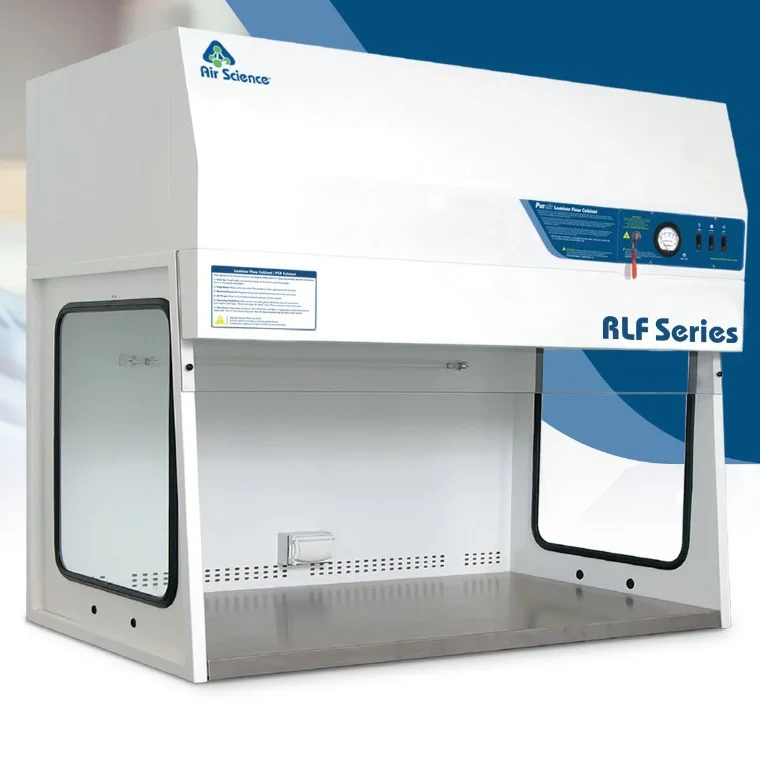
Anyone who's weighed out a fine-particle reagent on an open bench knows the problem. Micronised powders drift the moment a container's cracked open, clinging to gloves, settling on adjacent surfaces, and becoming airborne well past the immediate work zone. For labs handling active pharmaceutical ingredients (APIs), cytotoxic compounds or fine chemical powders, that drift is a genuine occupational exposure risk, not just a housekeeping nuisance. Reverse laminar flow technology addresses containment from a different vector than most operators expect.
How the Airflow Actually Works
Conventional laminar flow cabinets direct unidirectional HEPA-filtered air toward the operator, prioritising product protection over personnel protection. A reverse configuration inverts that airflow pattern. Air is drawn away from the operator's breathing zone and swept across the work surface, carrying airborne particulates back through HEPA filtration before they reach ambient air. That distinction in airflow direction matters once you're working with respirable-sized particulates fine enough to aerosolise with minimal agitation. The hazardous powder handling cabinet configuration relies on this directional containment barrier to maintain operator protection throughout the compounding process.
Where This Gets Used in Practice
Pharmaceutical compounding is the obvious application, particularly where cytotoxic or high-potency active pharmaceutical ingredients are involved and USP <800> compliance for hazardous drug handling is non-negotiable. It's not confined to compounding pharmacies, though. Forensic laboratories weighing trace evidentiary samples, analytical labs handling fine chemical powders during gravimetric weighing, and QC teams sampling raw materials all depend on the same containment principle. Multiplex filtration systems combining HEPA media with activated carbon extend that protection to vapour-phase hazards as well, which matters when a compound presents both particulate and chemical vapour risk simultaneously.
The Practical Advantage in Facility Design
Ductless operation is where these units earn their place in working laboratories. Because filtered air recirculates back into the room rather than exhausting externally, there's no dedicated ductwork or building penetration required. A cabinet can be positioned on a standard laboratory bench or mobile cart and commissioned within a day, sparing the facility a costly HVAC modification. That's significant for retrofitted labs where ducting infrastructure isn't feasible, and it reduces the mechanical load on the building's air handling system.
Fitting Into Australia's Compounding Landscape
Regulatory scrutiny around hazardous drug handling continues to tighten, and complex compounding equipment in Australia now routinely incorporates primary engineering controls purpose-built for particulate containment. Compounding pharmacies preparing chemotherapeutic agents or hormone therapies can no longer rely on open-bench technique, not when occupational exposure limits and aseptic integrity are both on the line.
Getting the Fundamentals Right
No cabinet substitutes for sound aseptic technique or correctly fitted PPE. Containment equipment controls airflow, not operator error. Paired with trained personnel and routine face velocity verification, reverse laminar flow containment closes a gap that open-bench handling simply cannot.
To know moe https://laftech.com.au/product/reverse-laminar-flow-cabinet/