
 Canada
 Cayman Islands
 Dominican Republic
 Hong Kong
 India
India
 Indonesia
 Ireland
 Jamaica
 New Zealand
 Singapore
 Thailand
 United Kingdom
 United States
 Vietnam

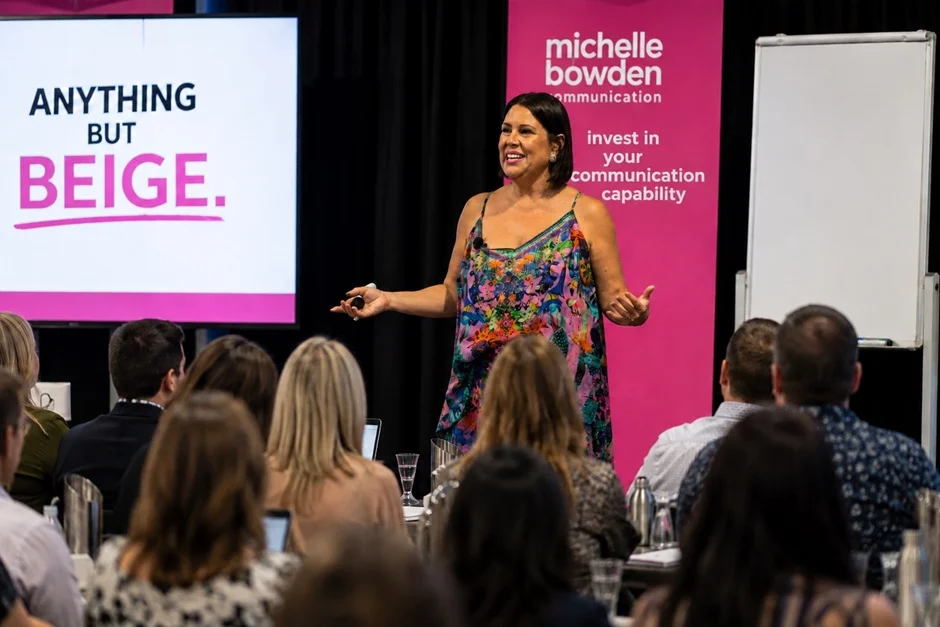
One of the most surprising trends I've noticed in recent years is that many organisations have quietly allowed public speaking capability to slip down the priority list.
As more meetings moved online and hybrid work became the norm, there seems to be an assumption that presenting mattered less. People are no longer standing at the front of a room. Fewer conferences are being held. Teams are communicating through screens rather than face-to-face.
Maybe that means people don’t need public speaking training? Unfortunately, the opposite is true.
In fact, there has never been a more important time to invest in public speaking training. Why? Because attention spans are shrinking. People are overwhelmed by information. Second screening has become commonplace, with participants checking emails, responding to messages and browsing the internet while supposedly attending meetings. Capturing and holding attention has become significantly harder than it was even five years ago.
In this environment, simply having expertise is no longer enough.
People need to know how to structure a message clearly, communicate with confidence and engage an audience quickly.
Whether you are presenting to clients, facilitating workshops, leading meetings or sharing project updates, your ability to communicate effectively has a direct impact on your business outcomes.
The organisations that understand the importance of upskilling with public speaking training and who continue to invest in communication capability (even when most of their presentations are delivered virtually) are the ones who will succeed in 2026 and beyond.
Take Procore who I worked with recently. Their people now present predominantly online and only occasionally in live environments. Impressively, in their relentless pursuit of excellence and commitment to exceeding client expectations, they recently invested in a full two-day corporate public speaking training program with me. They recognised that while the delivery platform may have changed, the need to communicate clearly, confidently and persuasively has not.
In fact, when audiences are sitting behind screens and distractions are only a click away, communication skills become even more important.
This is why demand for public speaking training in Sydney continues to grow. Forward-thinking businesses understand that communication is no longer a soft skill. It is a commercial skill. My client Endeavour Drinks calls public speaking a ‘power skills’! And these power skills influence sales outcomes, stakeholder engagement, leadership effectiveness, customer experience and team performance.
The best public speaking training doesn't teach people to become performers.
The best public speaking training teaches people to become clearer thinkers and more persuasive communicators. When people learn how to organise their ideas, structure their messages and communicate with confidence, meetings become more productive, presentations become more engaging and clients become more likely to trust what they hear.
I've seen the impact firsthand. Teams that once struggled to articulate their ideas become more influential. Leaders become more persuasive. Salespeople sell more. Technical specialists become easier to understand. And organisations create a culture where people feel more confident contributing their expertise. An example is Rick from Salesforce in New Zealand who was already a very successful salesperson before working with me. Rick attributed his incredible sales success to improving his focus, using best-practice formulas and really serving his clients after public speaking training with me.
Perhaps most importantly, effective public speaking training builds confidence. Not the confidence that comes from positive thinking, but the confidence that comes from knowing exactly what to say, how to say it and how to keep an audience engaged, whether you're presenting in a boardroom, a conference room or through a webcam.
Ultimately, investing in corporate public speaking training is about far more than helping people deliver better presentations. It's about helping teams communicate more effectively, collaborate more successfully and achieve better business outcomes.
Because communication isn't getting easier. It's getting harder.
And organisations that invest in communication capability now will have a significant competitive advantage in the years ahead.
If you'd like to help your people become more confident, persuasive and engaging communicators, learn more here: https://michellebowden.com.au/