 Canada
 Cayman Islands
 Dominican Republic
 Hong Kong
 India
India
 Indonesia
 Ireland
 Jamaica
 New Zealand
 Singapore
 Thailand
 United Kingdom
 United States
 Vietnam

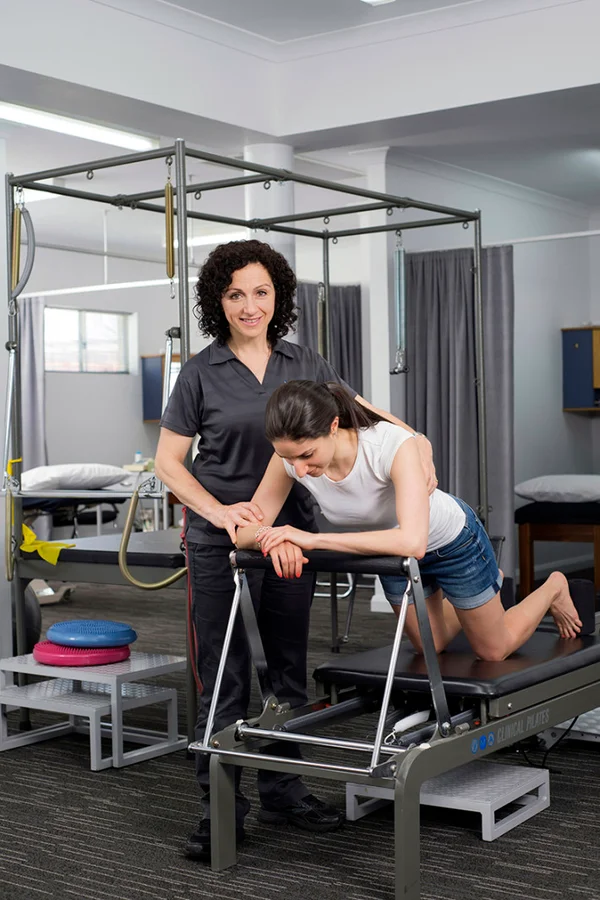
Back pain can alter the way you bend, walk, lift and sit. Pain often causes people to protect the area, to move less or to develop compensations that may become habits. Clinical Pilates can be a structured way to rebuild movement, strength and confidence once assessed by a physiotherapist for what is appropriate.
Individual Assessment Start with
Back injuries are all different, so rehab should start with an evaluation, not a standard set of exercises. A physiotherapist can evaluate symptoms, mobility, strength and requirements and determine where to start. At clinical Pilates Morley, this means that exercises and resistance can be customized to suit a person’s capacity and goals.
Re-learn how to move comfortably
Sometimes after an injury people are careful to bend, twist or reach. The movements used in Clinical Pilates can help to regain confidence with those patterns . This isn’t about rigid posture. The motion is smooth enough to do things without having to brace or be afraid and there's more control.
Expand Trunk And Hip Capacity
The spine is not an isolated structure. Trunk, hip and pelvic muscles provide movement and load sharing in lifting and walking. Pilates exercises are good for building strength and coordination in these muscles. Reformers and spring-based machines also allow a physiotherapist to change the resistance as a person gets stronger.
Progress Not Hurrying
Recovery is seldom a straight line. Some movements can be easy and some are still delicate. A graded program can begin with manageable exercises and slowly add range, resistance or complexity over time. Research into persistent non-specific low back pain suggests that Pilates might be able to help improve pain and function in some people. However the results are mixed and the evidence should not be generalized to all injuries in the same way.
Where Back Pain Comes In
People try Pilates for back pain because they want to do something active rather than resting for the long term. Australian health advice suggests most people with straightforward low back pain should stay active and slowly resume normal activities. A physiotherapist can help you work out how Pilates fits into that process, particularly if you’re still in pain, your movement is restricted or your confidence has dipped.
Make Off-Studio Rehab Useful
Good rehab should be transferred into normal life. Clinical Pilates may include movements that develop control for sitting, getting up, carrying, reaching and returning to work or recreation. This is important because improvement is measured by what you can do, not just by completing an exercise.
Know When Assessment Is First
Any new severe pain, progressive weakness, numbness, or other concerning symptoms should be evaluated before beginning exercise. Clinical Pilates can be used as part of a rehabilitation program for appropriate back injuries to help make movement more familiar and comfortable again. For learn more https://morleyphysio.com.au/clinical-pilates/