
 Canada
 Cayman Islands
 Dominican Republic
 Hong Kong
 India
India
 Indonesia
 Ireland
 Jamaica
 New Zealand
 Singapore
 Thailand
 United Kingdom
 United States
 Vietnam

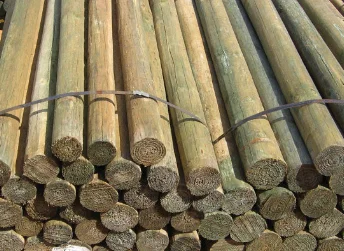
Fencing that sits in the ground faces a tougher job than most people realize. Moisture, insects, and years of harsh weather all work against timber sitting below the surface, which is exactly why the treatment process matters just as much as the wood itself.
What CCA Treatment Actually Does
Copper Chrome Arsenate treatment pushes preservative deep into the timber, not just across the outer layer. That full penetration means the pole stays protected even after the surface weathers and greys over time outdoors. Treated pine poles rated to H4, the Australian standard for ground contact, are built specifically to handle rot, fungal decay, and termite pressure in soil that never really dries out.
Why Shape and Diameter Still Matter
A pole's strength doesn't come from treatment alone, not entirely. Round pine poles carry loads differently than milled square posts, since the natural taper and consistent grain around the circumference distribute stress more evenly. Farmers and property owners lining rural boundaries often lean on this shape for strainer posts and gate posts, where the extra girth needs to hold serious tension without cracking or twisting.
Built for the Long Haul
Depending on soil conditions and local moisture, CCA-treated pine can realistically last three to four decades in the ground. That's a long runway for a material that costs a fraction of hardwood alternatives, which is part of why rural fencing projects lean on it so heavily. Setting each post to the right depth, generally somewhere between 300 and 600mm depending on height and soil type, makes a real difference in how that lifespan plays out.
A Few Things Worth Knowing
CCA treatment isn't approved for everything. Regulators in Australia restrict it from applications where people touch the timber often, like decking or outdoor furniture, since the concern there is different from a post buried in the ground. Fencing, sleepers, and other structural uses sit outside that restriction because the risk profile changes once the timber is out of regular hand contact.
A white, powdery residue sometimes shows up on the timber surface after treatment. That's just a harmless salt byproduct, and it brushes or hoses off without any trouble.
Getting the Fit Right
Matching post-hole diameter to pole size sounds obvious enough, but it's one of the most overlooked steps in a fencing job. A snug fit keeps the post stable once backfilled, which matters more over a fence's lifespan than most people expect walking into the project.
Treated pine remains a genuinely practical choice for anyone fencing rural or residential land, offering a rare combination of strength, longevity, and affordability that's hard to match elsewhere. To know more https://www.ruralfencingsupplies.com.au/treated-pine-poles


