 Canada
 Cayman Islands
 Dominican Republic
 Hong Kong
 India
India
 Indonesia
 Ireland
 Jamaica
 New Zealand
 Singapore
 Thailand
 United Kingdom
 United States
 Vietnam

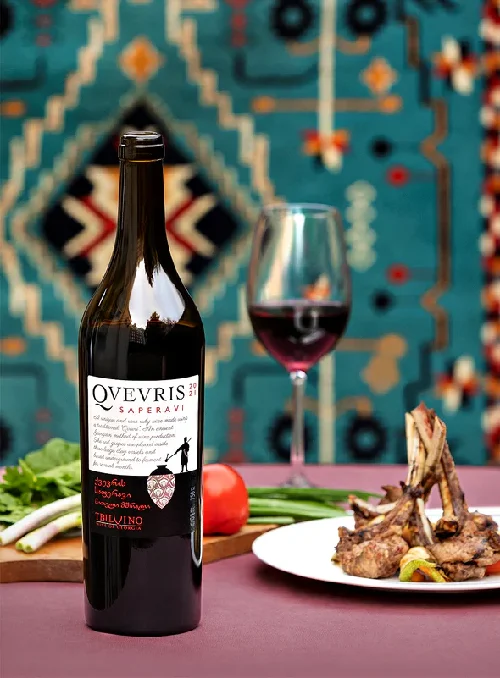
Someone hands you a glass of Saperavi at a tasting and asks if you prefer it off-dry or semi-sweet, and you realise you've never actually thought about the difference. Most people haven't. Both styles come from the same dark-skinned Georgian grape, but the sugar left behind after fermentation changes the whole experience.
What separates the two styles
Off-dry Saperavi has a small amount of residual sugar, usually just enough to soften the grape's naturally firm tannins without tasting sweet outright. Semi-sweet sits further along that scale, with noticeably more sugar carried through, giving a rounder, almost jammy mouthfeel.
Tannin is the real variable here. Saperavi is tannic by nature, more so than a lot of reds people are used to. Sugar acts like a cushion against that grip, which is partly why traditional Georgian winemakers have made semi-sweet versions for generations rather than always pushing for bone dry.
Off-dry: who it actually suits
Drinkers who like structure but want the tannin softened slightlyGood with grilled meats, aged cheese, or roasted vegetablesCloser in character to a typical dry red, just rounder on the finishA mate of mine who normally drinks nothing but Cabernet tried an off-dry Saperavi expecting something cloying. He finished the bottle in one sitting and asked where to get more. That reaction's pretty common once people get past the assumption that "off-dry" means sweet.
Semi-sweet: where it works best
Semi-sweet leans into dessert pairing territory, or works as a standalone sipper on a cold evening. It's less food-flexible than off-dry, but that's not really a flaw. Some wines aren't meant to sit alongside dinner.
Reading the label correctly
Georgian wine labels don't always spell sweetness out in plain English, so checking residual sugar figures or asking the seller directly saves a lot of guesswork. Preservative free wine options within Saperavi tend to show more batch variation too, since nothing's smoothing out the inconsistencies between vintages.
Does the qvevri method change the sweetness
Not directly. Qvevri ageing affects texture and earthiness more than sugar level, though some producers do stop fermentation earlier when making qvevri-aged semi-sweet styles, which keeps more natural sugar in the final wine.
Serving temperature makes a difference
Both styles get worse if served too cold or too warm. Off-dry Saperavi holds up best around 15-17°C, where the tannin stays present without turning sharp. Semi-sweet versions do better slightly cooler, closer to 12-14°C, since chilling it down keeps the sugar from tipping into syrupy territory. A bottle left out on a hot kitchen bench for half an hour before pouring changes the whole experience, and not for the better.
Making the actual choice
If you're new to Saperavi, off-dry is the safer starting point. It still shows the grape's tannic backbone, just without throwing a beginner straight into something heavy and dry. A preservative free red wine in this style also tends to feel more food-friendly than people expect, especially against richer winter meals.
Tamada works with small Georgian producers across both styles, which makes it easier to compare an off-dry and semi-sweet Saperavi side by side rather than guessing blind from a label alone.