Canada
 Cayman Islands
 Dominican Republic
 Hong Kong
 India
 Indonesia
 Ireland
 Jamaica
 New Zealand
 Singapore
 Thailand
 United Kingdom
 United States
 Vietnam

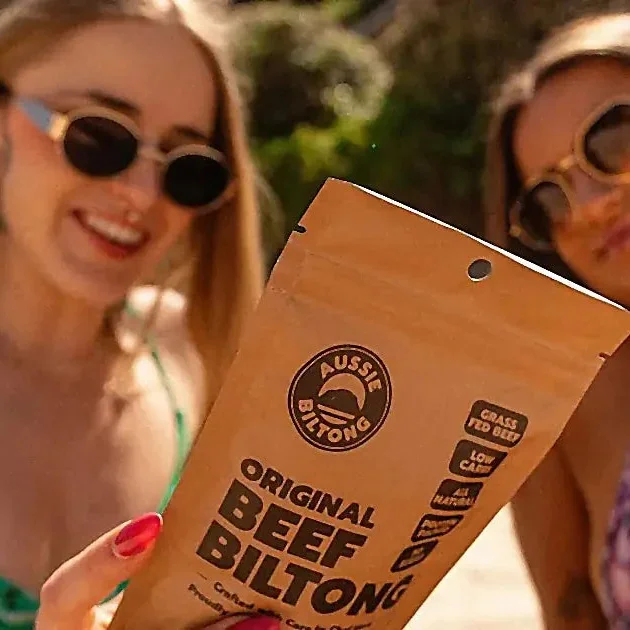
Walk into any deli or scroll through an online shop and the bags of biltong all look much the same. Dark strips, rustic labels, big protein claims. The real differences show up in the details, and a few quick checks at the shelf can save you from a chewy, over-salted disappointment.
Start With the Ingredient List
Short lists win. Beef, salt, vinegar, coriander and pepper are the classic mix. Added sugar, artificial colours or a long string of numbers usually signals a product built to cover up weak meat. Quality Australian biltong keeps things simple and names the cut, often silverside or topside.
Check the Look and Feel
Good strips run dark red or deep brown, with a slightly dull, dry surface. Gloss or visible dampness points to poor drying or too much oil. Fat should be a thin edge, with no thick white chunks. Press a piece through the bag: it should feel firm yet bend without cracking. Grey patches or fuzzy spots mean it’s a hard pass.
Read the Packaging
Vacuum sealing or a resealable bag with a barrier film protects flavour and keeps moisture steady. Check the packing date or best-before date, and look for a clear country of origin. Local makers often dry in small batches, which tends to give fresher, more consistent beef biltong on the shelf.
Trust Your Nose and Taste Buds
Fresh strips smell meaty, peppery and faintly of vinegar. Sour, rancid or sharp chemical whiffs spell trouble. Once you open the bag, the first bite should deliver savoury depth and a clean spice finish. Salt shouldn’t bully everything else. Wet biltong sits soft and juicy, dry biltong snaps, and both are legitimate styles, so pick the texture you like.
Ask the Seller Questions
Good makers love talking shop. Ask which cut they use, how long the meat hangs and if they dry it in a controlled chamber. Clear answers signal confidence. Vague replies or a shrug about the beef’s origin are worth noting. Online, scan reviews for comments on saltiness, freshness and how the order arrived.
Start Small First
Grab a small bag first and test it at home. Store it somewhere cool and dry, and keep the leftovers in a breathable clean paper bag. If the flavour, texture and freshness check out, order more with total confidence. Good biltong rewards a little patience at the shelf, and your snacking standards will rise from there.